
Additionally, homeowners should regularly check for drafts and seal any gaps around windows and doors to maintain a stable indoor temperature. It is advisable to allow faucets to drip during extreme cold to relieve pressure in the system. Furthermore, when planning to be away during winter months, ensure that the heating system is set to a minimum temperature to prevent pipe freezing. Regular maintenance and precautionary measures can significantly reduce the risk of water damage from frozen pipes.
Why do pipes freeze?
Water expands as it freezes. That expansion can put enough pressure on a pipe to make it crack or burst, especially when the pipe is exposed to severe cold or is poorly insulated. The American Red Cross identifies outdoor lines, unheated areas, and pipes along exterior walls as common spots for frozen pipes. [1]
For homeowners in Virginia, DC and Maryland, the important point is that your thermostat reading does not tell you the temperature at every pipe. A water line in an unheated crawl space or against an outside wall can be much more exposed to cold air than the rooms where you spend most of your time.
Leak monitoring means using connected IoT (sensor)s to detect conditions such as water or low temperature at selected risk points and alerting people who can respond.
A good prevention plan therefore has two parts: reduce the chance that plumbing freezes, and create a way to know when a vulnerable area is getting too cold.
Where do frozen pipes happen first?
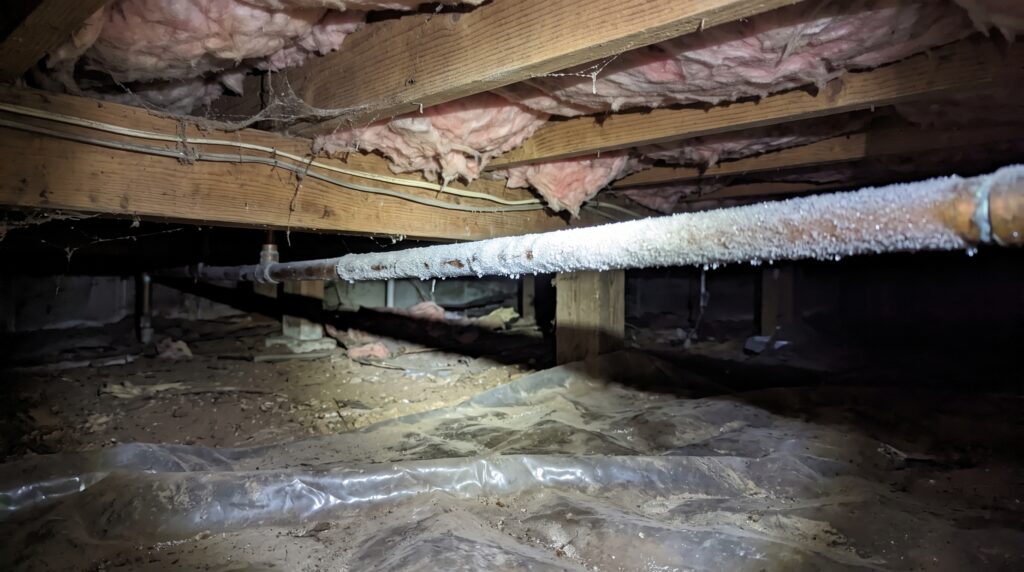
The highest-risk locations are usually places where plumbing is exposed to cold air or has little insulation. The Red Cross specifically lists outdoor hose bibs and other outdoor lines, unheated areas such as basements, crawl spaces, attics and garages, kitchen cabinets, and pipes along poorly insulated exterior walls. [1]
- Crawl spaces: Cold air can surround water lines, especially where insulation is limited.
- Garages: Water lines may be exposed to colder conditions when the garage is not heated.
- Outside walls: Pipes inside or near an exterior wall can lose heat quickly.
- Attics: Plumbing routed through an unheated attic is exposed to cold conditions.
- Under-sink cabinets: This is especially important when plumbing is on an exterior wall.
- Outdoor hose connections: Disconnect, drain and store hoses before freezing weather.
Maryland’s insurance department gives similar guidance, recommending insulation for pipes in attics, crawl spaces and along outside-facing walls, along with sealing drafts and winterizing outdoor plumbing. [2]
How to prevent frozen pipes before the first freeze

Use this checklist to prevent frozen pipes before the first serious cold spell:
- Find your main water shutoff. Make sure you know where it is and that it can be operated if a pipe breaks. Maryland and Virginia public guidance emphasize knowing the location of the main shutoff. [2][3]
- Inspect vulnerable plumbing. Check crawl spaces, garages, attics, exterior walls and under-sink cabinets for exposed or poorly insulated water lines. [1]
- Insulate exposed pipes. Use insulation designed for water pipes, particularly in unheated areas. [1]
- Disconnect outdoor hoses. Drain them and close the indoor valve supplying outdoor hose bibs where applicable. [1][4]
- Seal cold-air leaks. Maryland guidance recommends sealing cracks and gaps around the exterior and weatherstripping doors and operable windows. [2]
- Keep vulnerable cabinets open during severe cold. Opening kitchen and bathroom cabinet doors can let warmer room air reach plumbing. Move cleaners and other hazardous products away from children and pets. [1]
- Keep the heat on. The Red Cross recommends leaving a home’s heat on at no lower than 55°F when you are away during cold weather. [1]
- Consider a slow drip during very cold weather. The Red Cross and Virginia water utilities recommend allowing cold water to drip from faucets served by exposed plumbing. [1][5]
- Plan for power or heating problems. A loss of heat can make vulnerable plumbing more likely to freeze. Have a plan for monitoring the property and responding if heating or power fails. [1]
No single step stops frozen pipes on its own. Insulation, heat, reduced drafts and timely awareness work together.
What to do if you have frozen pipes
A faucet that produces only a trickle, or no water, during freezing weather can be a sign of frozen pipes.The Red Cross recommends keeping the faucet open while you work on the frozen section. [1]
- If a pipe has burst or is leaking, shut off the main water supply immediately.
- Keep the affected faucet open so water can flow as the ice melts.
- Apply gentle heat using an electric hair dryer, heating pad, portable space heater used safely, or warm towels.
- Never use a torch, blowtorch, kerosene heater, propane heater, charcoal stove or another open flame to thaw a pipe. [1]
- If you cannot locate the frozen section, cannot safely reach it, or suspect the pipe has already cracked, call a licensed plumber. [1]
After the line thaws, check the pipe and nearby joints for leaks. A frozen pipe can crack before the blockage becomes obvious, and the leak may appear when the ice melts and water pressure returns.
How does a temperature sensor help?
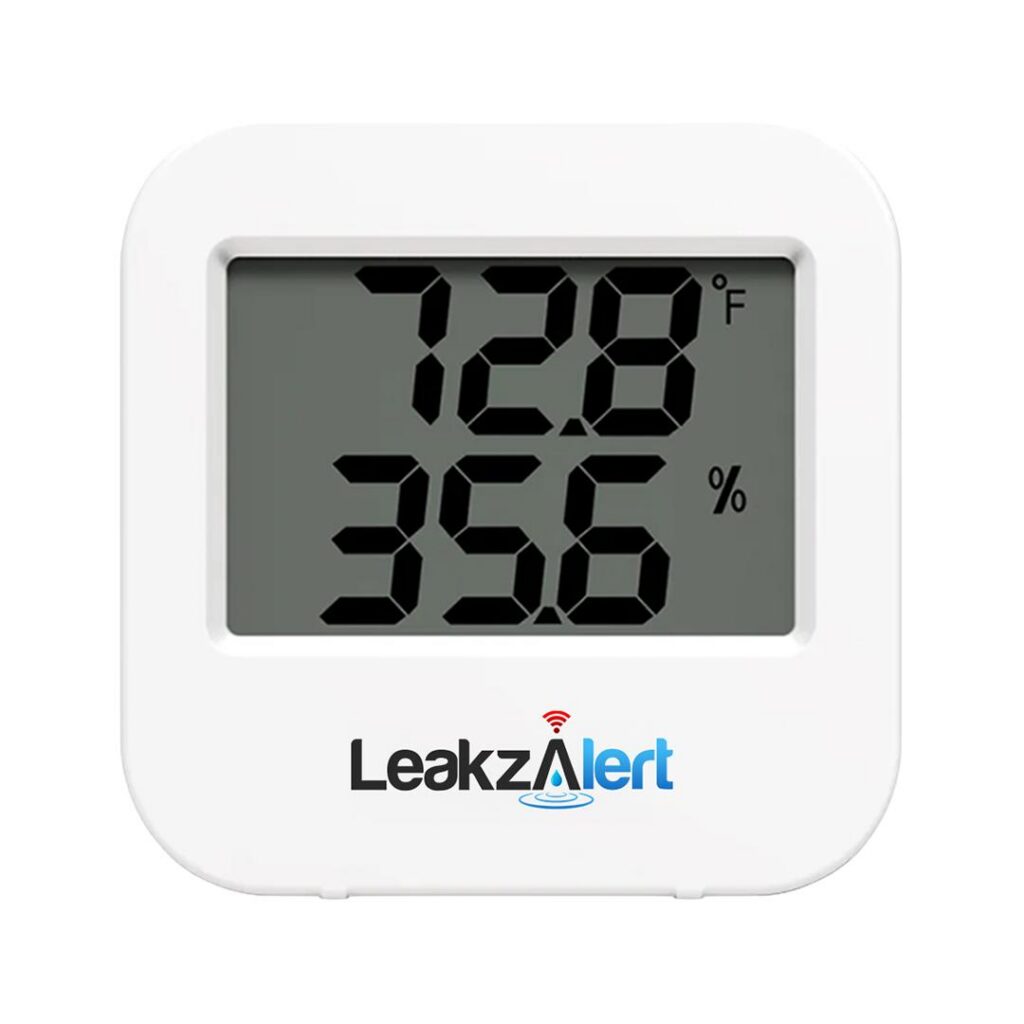
A temperature-monitoring IoT sensor adds an early warning for frozen pipes to the normal winter checklist. Instead of relying only on a thermostat inside a living area, you can place IoT (sensor)s at risk points where cold conditions are more likely to affect plumbing.
For LeakzAlert, IoT (sensor)s can be placed at risk points such as sinks, water heaters, washing machines, toilets and cold spaces. When an IoT (sensor) detects water or low temperature, the alert appears on the monitoring screen, and a real person from the 24/7 monitoring team calls the customer right away.
If the customer does not answer, the team calls up to three backup contacts. With the shutoff valve add-on, the team can close the main water valve remotely only with the customer’s approval.
LeakzAlert also offers a free survey before installation to identify risk points. Connectivity options can vary by property, so the appropriate hub and backup arrangement should be confirmed during the survey. [6]
For homeowners and property managers in Virginia, DC and Maryland, this can be useful when a vulnerable space is difficult to inspect regularly. It does not replace insulation, heating, plumbing maintenance or an emergency response plan. It adds monitoring so a low-temperature condition can be noticed sooner.
LeakzAlert’s residential pricing is $34.99 per month or $359.99 per year, with four IoT (sensor)s included on the annual plan. Pricing and equipment requirements can change, so confirm the current plan before purchase. [6]
How LeakzAlert handles this
- LeakzAlert places IoT (sensor)s at risk points such as sinks, water heaters, washing machines, toilets and cold spaces.
- When an IoT (sensor) detects water or low temperature, the alert appears on the monitoring screen and a real person from the 24/7 monitoring team calls the customer.
- If there is no answer, up to three backup contacts are called.
- With the shutoff valve add-on, the main water valve can be closed remotely only with the customer’s approval.
FAQ‘s
How can I prevent frozen pipes?
Insulate exposed plumbing, seal drafts, disconnect outdoor hoses, keep heated areas warm, and open under-sink cabinets during severe cold. A slow drip can also help protect vulnerable lines. [1][2]
What temperature should I keep my house to prevent pipes from freezing?
The Red Cross recommends leaving the heat on at no lower than 55°F when you are away during cold weather. Homes differ, so vulnerable plumbing locations and local conditions should also be considered. [1]
What should I do if I have frozen pipes?
Keep the faucet open, shut off the main water supply if a pipe has burst or is leaking, and thaw the pipe slowly with gentle heat. Never use an open flame; call a licensed plumber if the frozen section is inaccessible or you suspect damage. [1]
Should I let my faucets drip when it freezes?
A slow cold-water drip can help keep water moving through vulnerable plumbing. Virginia water utilities and the Red Cross recommend this approach during very cold conditions. [1][5]
Can a temperature-monitoring IoT (sensor) prevent a frozen pipe?
An IoT (sensor) cannot physically stop freezing, but it can provide an alert when a monitored area reaches a low-temperature condition. That warning can give a homeowner or property manager an opportunity to respond before the situation becomes a larger problem.
Book a free survey: https://leakzalert.com/book-a-survey/
List of source links
- [1] American Red Cross — Preventing & Thawing Frozen Pipes
- [2] Maryland Insurance Administration — Protect Your Pipes
- [3] Arlington County, Virginia — Prevent Frozen Pipes
- [4] Calvert County, Maryland — Protect Your Pipes From Freezing Temperatures
- [5] Fairfax Water — Winter plumbing guidance
- [6] LeakzAlert — Pricing and service information